
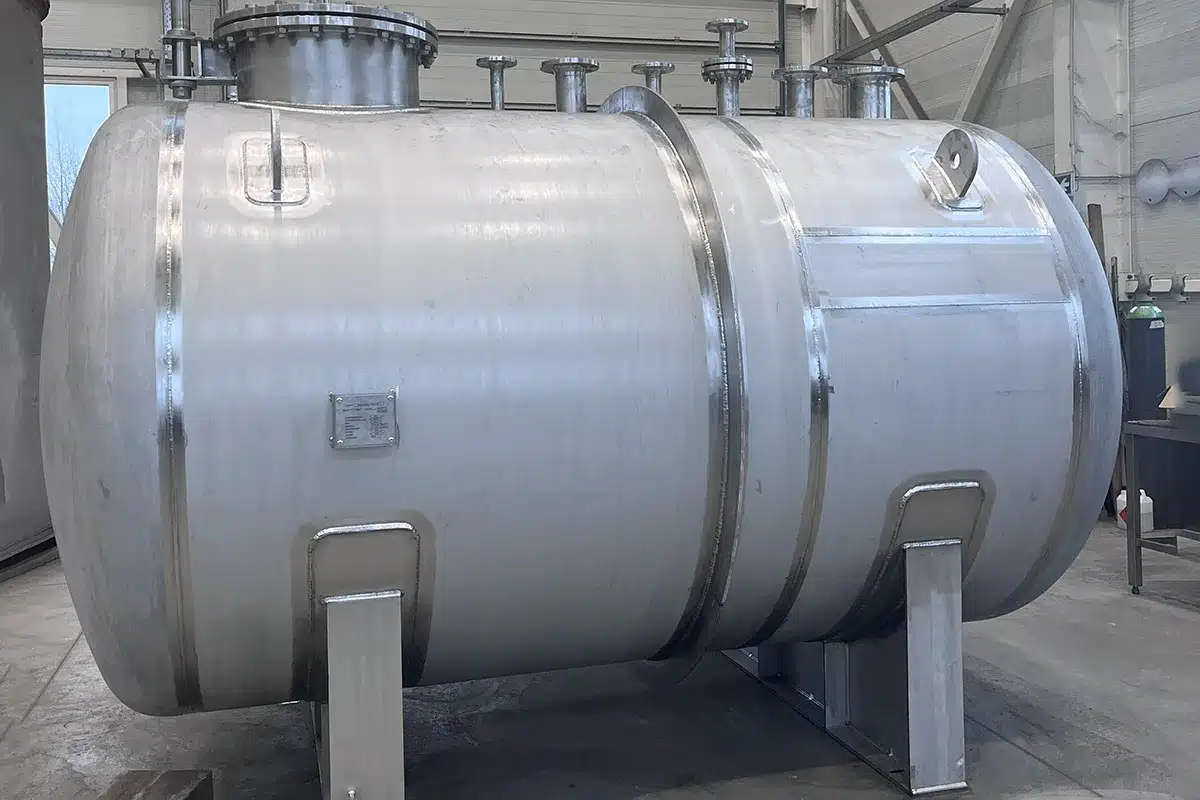
In the life of industrial facilities, the installation or refurbishment of pressure vessels is one of the most complex engineering and regulatory processes. It is not simply a matter of a tank or a section of piping: these systems can pose potential hazards, which is why their design, manufacturing, and operation are governed by strict regulations. In this article, we help you navigate the complexity of these processes, and our specialists also share a few practical tips.
When is equipment considered a pressure vessel?
Put simply, any tank, pipeline or safety accessory designed for an internal overpressure above 0.5 bar is considered a pressure vessel.
In Hungary and across the EU, this area is governed primarily by Directive 2014/68/EU — the Pressure Equipment Directive (PED) — and, at national level, by Decree 44/2016 (XI. 28.) of the Ministry for National Economy.
During classification, the designer must take the following into account:
- Pressure rating (PS) – the overpressure, expressed in bar, for which the manufacturer has designed the pressure vessel. The pressure vessel must be able to withstand this pressure continuously under normal operating conditions at the specified temperature.
- Hazard level of the fluid – Group 1 includes explosive, flammable or toxic substances. Group 2 includes less hazardous media, such as water or air.
- Volume (V) or nominal diameter (DN) – volume (V) indicates the capacity of pressure vessels in litres, while nominal diameter (DN) indicates the internal size of pipelines in millimetres.
DST specialist’s tip: The hazard category is determined by the product of pressure (PS) and volume (V). This classification is critical, as it determines whether the involvement of an external notified body is required.
Key components of a pressure vessel system
- Vessel body (shell): The main structure responsible for containing the pressure.
- Nameplate: Displays the PS (maximum allowable pressure) and the CE marking.
- Safety valve: Prevents the design pressure from being exceeded.
- Pressure gauge (manometer): Used for continuous monitoring of the operating pressure.
- Manway (inspection opening): An access point required for internal structural inspections.
- Pipelines and valves: Ensure the safe transfer and shut-off of the medium.
- Containment tray: Used to collect potential leaks when hazardous media are involved.
Design and permitting require a dual approach
The foundation of a successful project is the selection of a qualified design engineer. It is important to understand that this involves two closely related, yet distinct, design processes:
- Pressure vessel design: The mechanical and structural design of the vessel itself or of the pipeline section.
- Plant design: The design of the environment surrounding the pressure vessel, including containment systems, fire protection systems, lightning protection, and process connections.
DST specialist’s tip: Always start by checking the nameplate. If it is missing or illegible, the pressure vessel does not legally exist in the eyes of the authority, and it must be re-certified, which is extremely costly.
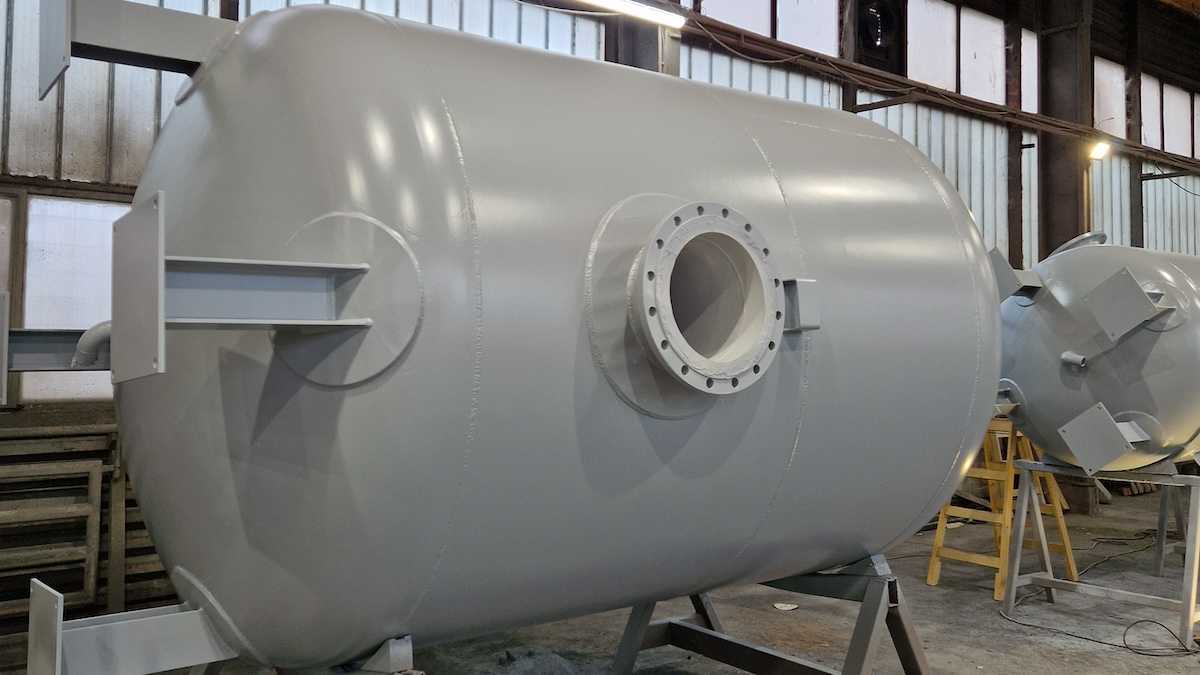
Permitting for installation and the competent technical safety authority
Based on the data provided by the operator, the designer prepares the documentation required for the installation permit. This documentation must be submitted to the competent technical safety authority. The authority reviews the installation conditions, including the required safety distances, protective devices, and the safety of the intended operating environment.
When is a notified body (NoBo) required?
If the pressure vessel falls into a higher hazard category, the involvement of a notified body, known as a NoBo (Notified Body), is mandatory. The role of the NoBo is to carry out a preliminary review of the design documentation and then perform inspections during manufacturing. This independent oversight ensures that the pressure vessel complies with the strictest safety requirements.
DST specialist’s tip: The involvement of a NoBo is not optional. If the PS × V value exceeds the regulatory threshold, the pressure vessel cannot be placed on the market without the involvement of a notified body, and the competent technical safety authority will not approve its commissioning.
Manufacturing and installation with continuous documentation
Once the approved designs are in place, the actual work can begin. In a complex contractor service, strong emphasis must be placed not only on the physical manufacturing itself, but also on the critical processes surrounding it.
During manufacturing, continuous documentation is essential. Every single weld seam, material certificate, and non-destructive test must be fully traceable. This documentation package is what enables the manufacturer to demonstrate compliance to both the authority and the NoBo.
At the end of manufacturing, structural and leak-tightness tests are carried out — first at the manufacturing site, and then again on site after installation.
DST specialist’s tip: It is important to know that the regulations do not apply only to newly manufactured pressure vessels. A more significant repair or modification — for example, welding in a new nozzle or a change in wall thickness — is also subject to approval and requires design review and an official inspection.
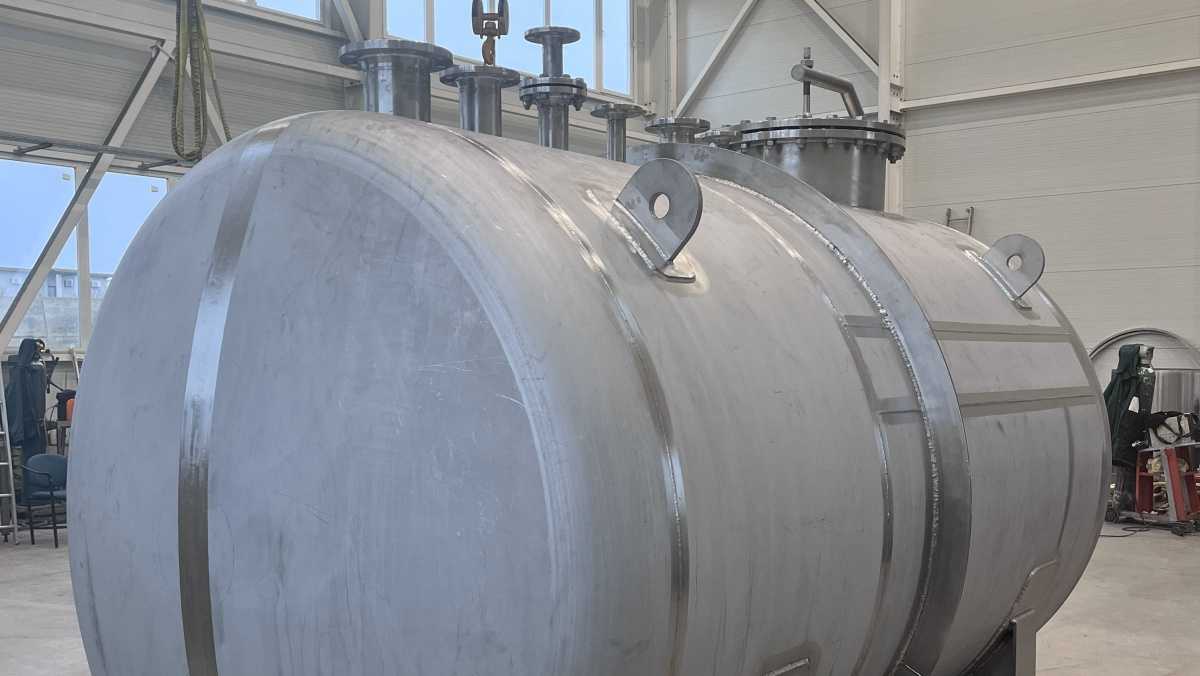
Commissioning is always the operator’s responsibility
It is important to clarify that commissioning is in every case the responsibility of the operator. The manufacturer cannot legally assume this responsibility, but at Duna Steel Tech, for example, we provide expert support for the commissioning of the pressure vessels we manufacture.
The final step in the process is applying for the permit for use. At this stage, the competent technical safety authority reviews not only the pressure vessel itself, but also the entire surrounding environment:
- Are the required safety distances in place?
- Are the lightning protection system and the containment system functioning properly?
- Are the NoBo certificate and the complete manufacturing documentation available?
Request assistance from Duna Steel Tech
A pressure vessel project requires precise preparation. For a maintenance engineer, the greatest support can come from a manufacturing partner that not only delivers the equipment itself, but also has a clear understanding of the entire permitting and documentation process.
Our expertise ensures that your investment is not only efficient, but also fully compliant from a regulatory perspective. Planning a new project or need a repair? Get in touch with us, and we will be happy to help.
