
In the past 80 years, stainless steel wine fermentation tanks have become a staple in modern winemaking for storage, fermentation, and aging. Though they only appeared in the 1950s, they quickly replaced techniques that had been used for thousands of years.
Today, stainless steel tanks are used not only in large-scale production but also by premium wineries. This article examines the pros and cons of traditional wine containers and explains why many winemakers prefer stainless steel tanks.
Traditional wine tank technologies still in use
Winemaking is one of the world’s oldest crafts. Some container types – used for centuries – are still around today, mostly for small-scale or specialty use.
Winemaking is an ancient craft, with some traditional techniques and tools lasting thousands of years. A few of these old wine containers are still in use today, although often in a limited capacity.
Clay vessel
Clay vessels have been part of winemaking since ancient times. Some records trace their use in Georgia back 8,000 years. The material is durable as long as it remains undamaged. However, due to its fragility and size limitations, it is impractical and expensive for large-scale production.

Clay vessels from China
Important properties of clay vessels in winemaking:
- Porous material
- Fragile and breakable
- Neutral pH
- Excellent heat retention
Oak barrels
The oak barrels are symbols of winemaking. With proper treatment, they give the wine a unique flavor, which makes them essential for aging premium wines. It is suitable for both fermentation and storage but requires regular care. The wooden wine tank is the larger version of the barrel and can be equipped with fittings, to make maintenance easier. However, it has no more differences from the barrel.

Oak barrels, the foundation of wine storage
Important characteristics for winemaking:
- Porous material
- Assd distinctive flavor to the wine
- Requires careful maintenance
- Poor heat retention
Glass demijohns
The glass demijohn is a wine container suitable for storing and transporting smaller quantities, as well as for fermenting white and rosé wines. It is an excellent vessel for home use or for beginner winemakers experimenting with small batches. It is not suitable for fermenting red wine and has very limited industrial applications.
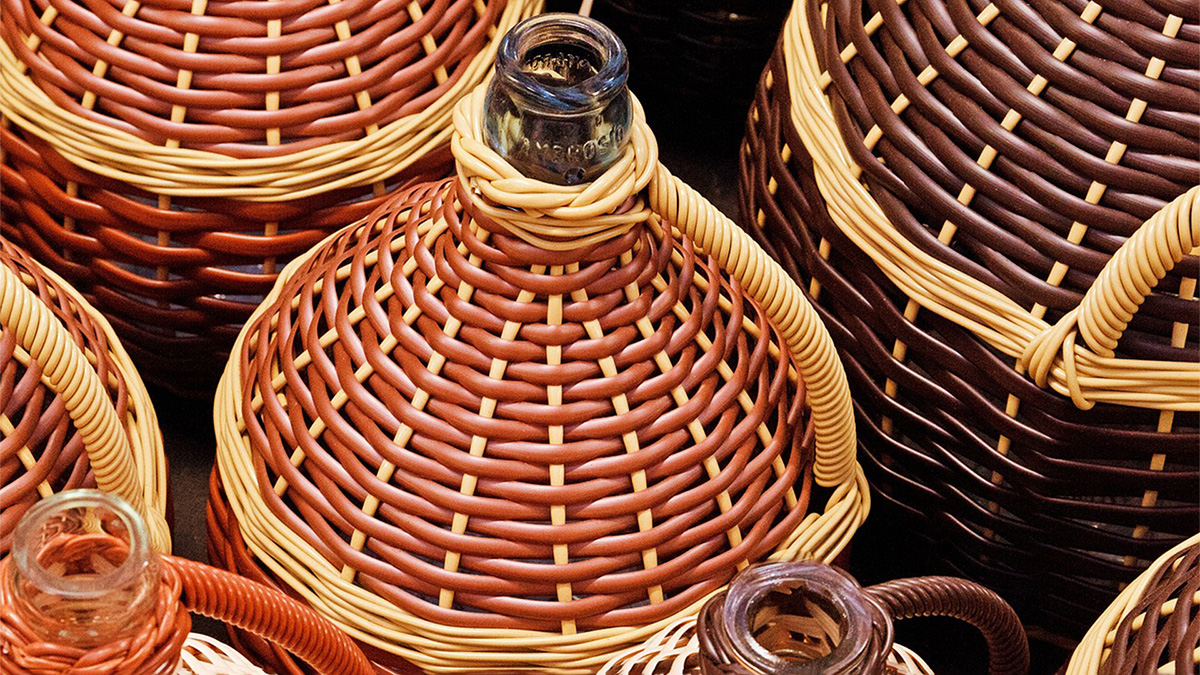
Demijohns
Important characteristics for winemaking:
- Sealed and can be bottle-screwed
- Chemically neutral material
- Easy to clean and maintain but must be stored in a dark place
- Poor heat retention
Modern wine tanks
Winemaking continues to evolve, and as new materials appear in other industries, many find a place in wineries too. While it might sound surprising, both concrete and food-grade plastic can be used to hold wine. Still, stainless steel has clearly become the standard.
Concrete and food-grade plastic wine tanks
BPA-free, food-safe plastic containers are suitable for wine fermentation. Although their capacity is typically under 200 liters, their affordability and easy handling make them ideal for hobby winemakers and they can even be used for red wine.
Important characteristics for winemaking:
- Sealable lid – no oxidation or evaporation
- Chemically neutral
- Scratches easily – harder to clean and disinfect
- Very poor heat retention
Polished concrete wine tanks were popular before the rise of steel. Unlike earlier tank types, they can be cast into various shapes, allowing for unique designs and can be fitted with accessories. However, they are expensive and difficult to move, making their use more of a luxury nowadays.
Due to its properties, it is considered the modern alternative to oak barrels, but only useful in specific winemaking setups.
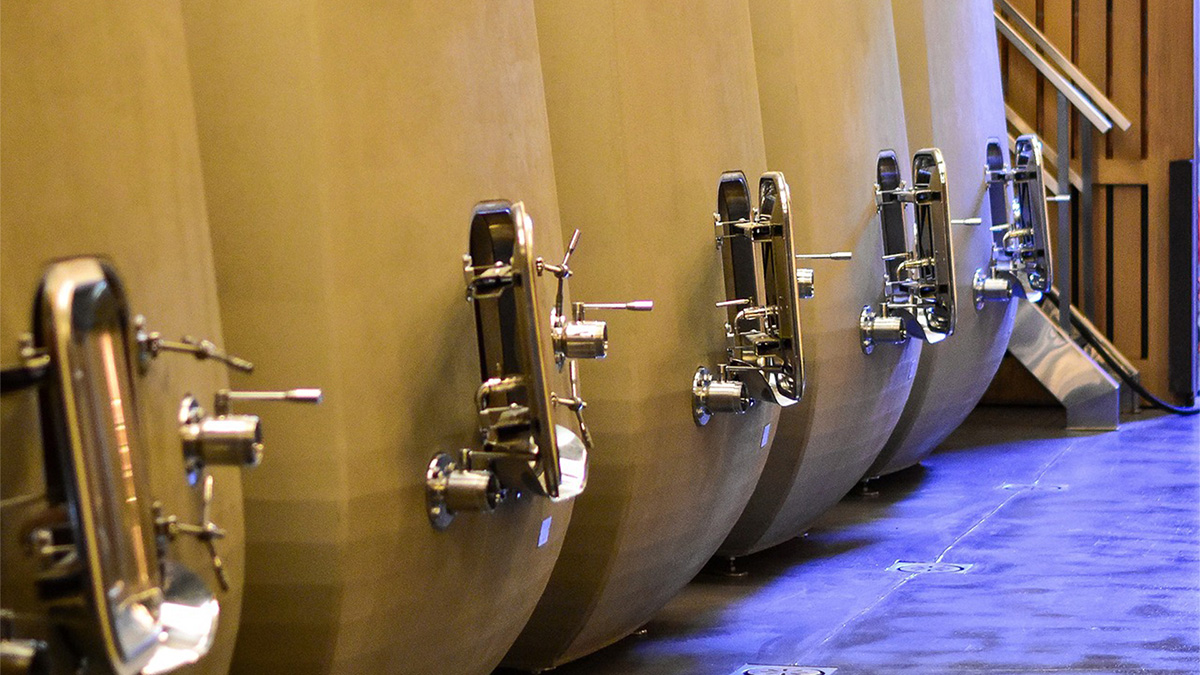
Equipped, polished concrete wine tanks
Important characteristics for winemaking:
- Porous material, requires frequent sanitization
- Mostly neutral, but wine acids can extract a metallic taste from the concrete
- Retains pigments, potentially staining future batches
- Excellent heat retention: stays cool in summer, warm in winter
Stainless steel: the go-to wine tank
Over the past decades, stainless steel wine tanks have become dominant. They are available in DIN 1.4301, 1.4401, and higher, better material grades. Since they can be manufactured in almost any size, they are used in small private cellars and in larger wineries as well.

Ready-to-ship, equipped steel wine tanks
They can be made in various shapes, with different surface treatments, and can accommodate a wide range of fittings. Suitable for fermenting, aging, and storing white, rosé, and red wines.
The main advantage of the steel wine tank is the great flexibility in adapting to the winemaker’s needs.
Important characteristics for winemaking:
- Sealed, preventing oxidation
- Chemically neutral material
- Easy to clean and maintain
- Acceptable heat retention on its own.
Due to these properties, fresh wine can be produced in a steel tank, preserving the regional characteristics of the grapes. This is especially true when equipped with a cooling mantle, allowing for slow and controlled aging, and the tank can also be insulated. Stainless steel has a scratch-resistant, easy-to-clean, and easy-to-sanitize surface that prevents bacteria from settling.
Stainless steel tanks are extremely durable and can be used for decades. They offer excellent long-term value and retain their worth even when resold.
Custom steel wine tanks
The size and shape of wine fermentation tanks can be different. Beyond the common fittings used in winemaking, numerous additional components can be added to steel wine tanks to make their use easier and increase their functionality.
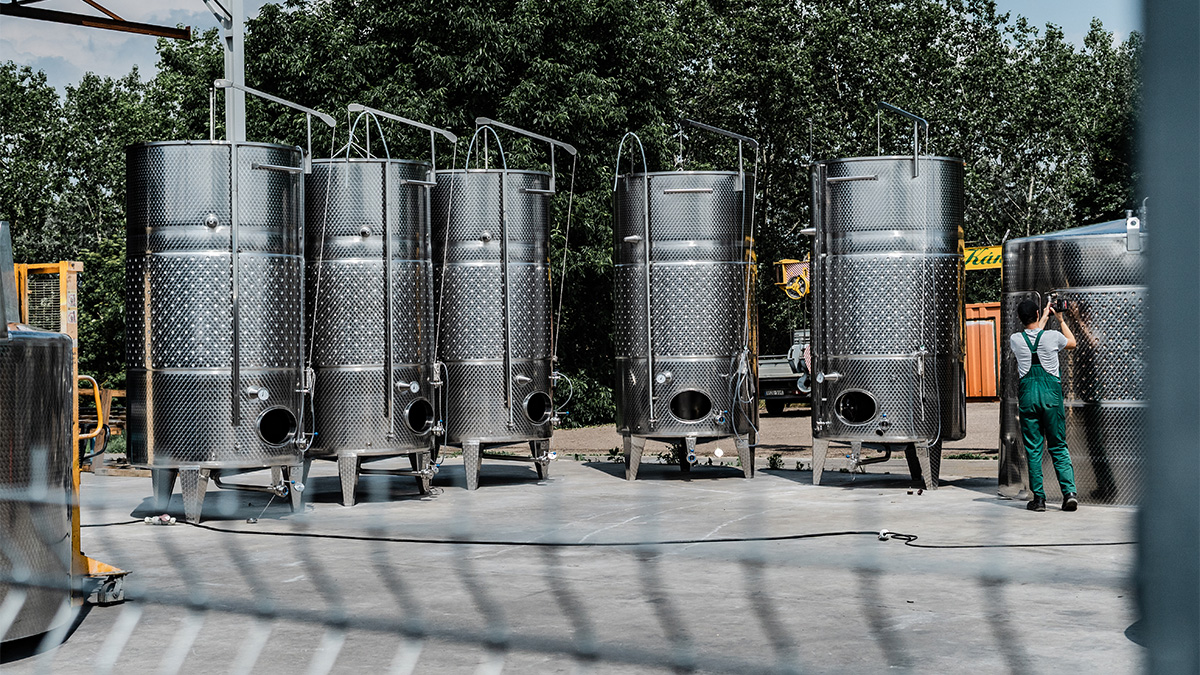
Stainless steel tanks in production at Duna Steel Tech
Duna Steel Tech builds custom stainless steel wine tanks tailored to your needs. We also produce matching piping systems, catwalks, stairs, and other structural components to complete your setup.

