
Steel alloys play an increasingly important role in both industry and everyday applications. But when it comes to delivering the best results – especially in fields like stainless steel tank manufacturing – choosing the right type of steel involves balancing quality, cost, and specific technical requirements.
That’s why selecting the right alloy is critical. Our goal is to guide clients toward the most suitable material for their needs.
The origin and classification of stainless steel
Steel is one of the most widely used metal alloys, typically made from iron and carbon. Stainless steel is a special type that contains at least 10.5% chromium. This chromium forms a protective oxide layer on the surface, which prevents rust.
The first chromium-rich alloy was created in 1821 by Pierre Berthier, who used it to make acid-resistant kitchen tools. The term “inox” comes from the French inoxydable, meaning “non-oxidizing.”
Stainless steel properties can be further enhanced by adding other elements such as nickel, molybdenum, or manganese—depending on the desired hardness, corrosion resistance, or workability. For example, 1.4404-grade steel (used for agricultural chemical tanks) contains all three. Low phosphorus and sulfur content is also key in high-quality alloy steels.
Metallurgical processes, alloying, and tempering all affect the crystal structure of steel. Based on these factors, steel can be categorized into four main categories.
Austenite, or gamma iron steel
The most popular stainless steel is austenitic or gamma iron steel, which accounts for 70% of all stainless steel production. It is typically non-magnetic, highly workable, and easily formed both hot and cold. Its different variants have varying properties; some types are easily weldable, while others are well-suited for machining.
Additionally, it has excellent corrosion resistance. Its low thermal conductivity is advantageous in tank manufacturing, as it acts as an insulator. Due to its versatility, austenitic steel is used in many industries.
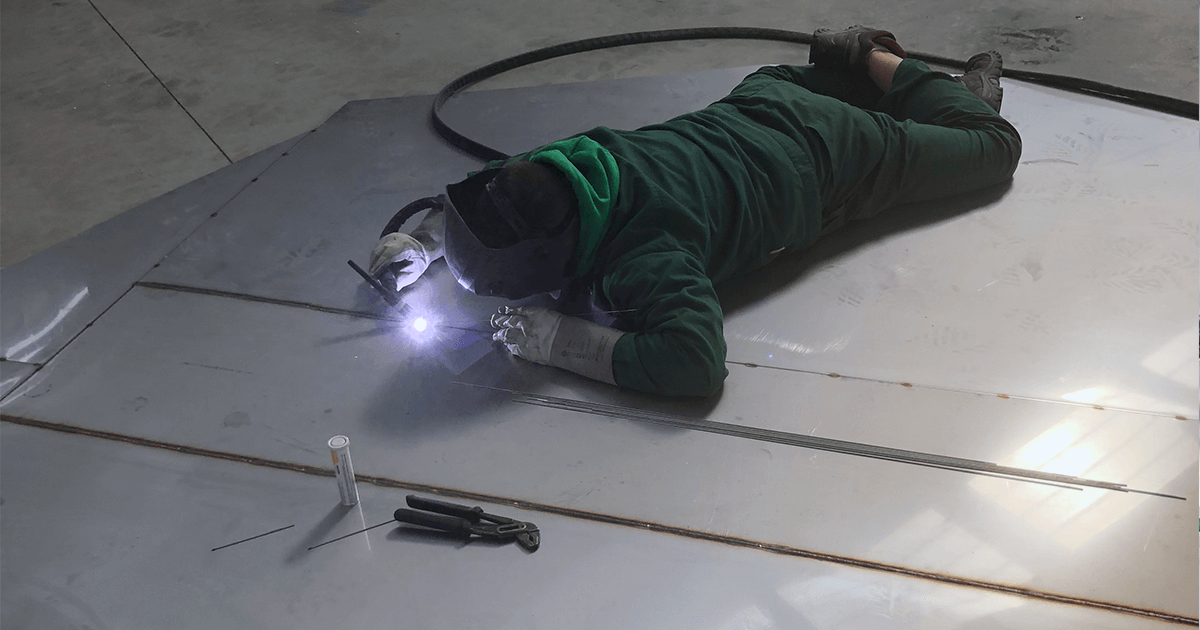
Steel and chill
Ferrite steel, or alpha iron
Ferritic, or alpha iron steel, is a type of stainless steel that typically contains 11-17% chromium. The material is magnetic and can be welded under certain conditions. It is well-suited for both hot and cold forming as well as machining. This material handles dynamic stress well and is commonly used in mildly to moderately corrosive environments, such as water-based solutions of organic acids or salts.
Martensitic steel
Martensitic steel is a type of chromium steel with a
- chromium content of 12-18% and
- carbon content of 0.10-0.44%.
The material is magnetic and- unlike austenitic and ferritic types- its properties can be improved through heat treatment. While it is formable and polishable, its weldability is typically limited or not recommended. The material has high wear resistance and edge retention, and its corrosion resistance can be enhanced by adding molybdenum.
Duplex steel
Duplex steels have a crystal structure composed of both austenite and ferrite phases. They typically have up to twice the tensile strength of purely austenitic steels and better acid resistance.
Special care must be taken during processing, as the heat from welding can locally alter the structure of duplex steel, making it purely ferritic or austenitic. Therefore, proper welding techniques and expertise are crucial for processing duplex steels properly.
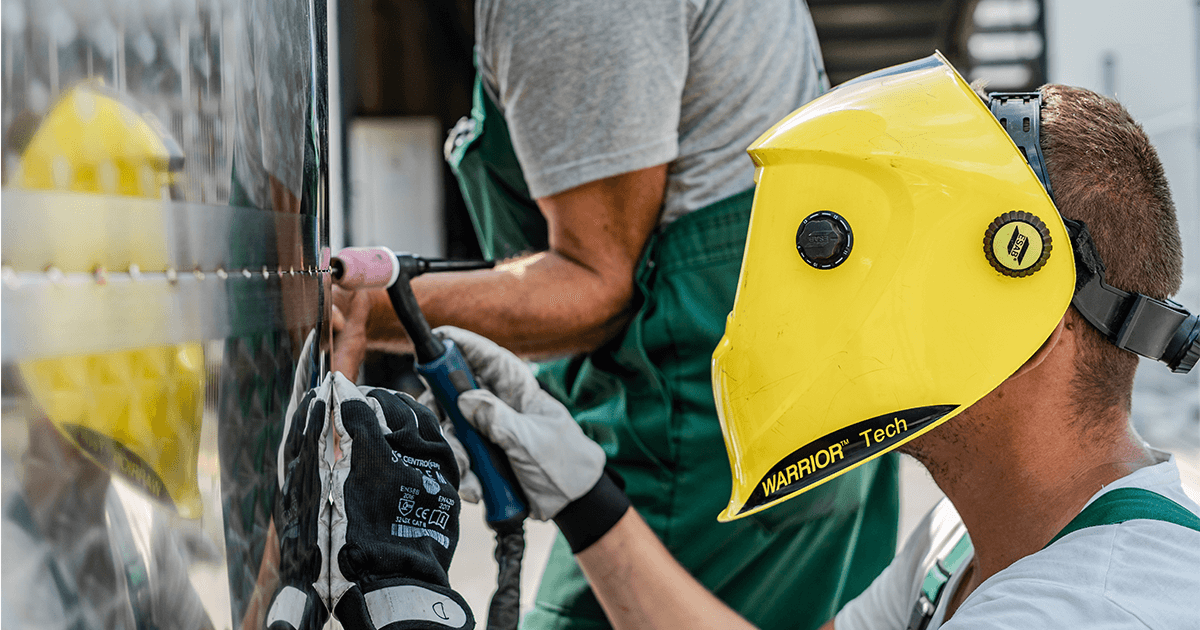
Stainless steel tank manufacturing for winery use
Understanding standard markings
Steel grades are labeled using several systems, such as DIN (Germany), EN (Europe), and AISI (USA). In Hungary, the MSZ EN 10027-1 and -2 standards are common.
For identifying stainless and acid-resistant steels, we primarily use the German-origin material number. For example, the 1.4404 designation:
- 1 = steel
- 44 = category based on properties
- 04 = serial number assigned by the standards body
The American AISI system identifies the same steel with the designation 316L. Structural carbon steels or carbon steels used for component manufacturing are labeled differently, often including the tensile strength value, for example:
- S235 structural steel has a tensile strength of 235 N/mm², while
- P355 pressure vessel steel has a tensile strength of 355 N/mm².
Tool steels are labeled based on their carbon content, for example, C45 tool steel has a carbon content of 0.45%. Proper steel labeling is crucial for selecting the right materials and ensuring their efficient use.
Key factors when choosing between carbon and stainless steel
When selecting steel, various factors must be considered. During the design phase, it is essential to precisely define the requirements and specify the material quality. For example, in tank manufacturing or process piping, the nature of the transported or stored medium and its effects on the steel must be considered. In the case of stainless steel walkways, attention should be given to weather impacts and the physical stresses of the work processes.
It’s important to note that all acid-resistant steels are stainless, but not all stainless steels are acid-resistant.
Tensile strength is a major factor, but cost, corrosion resistance, and ease of fabrication also matter. We welcome well-prepared engineering plans from clients, but we can also handle the design and calculations in-house.
Common steel grades at Duna Steel Tech
At Duna Steel Tech, we use a wide range of steel grades in our daily work. The 1.4301 stainless steel is excellent for food industry applications, such as winemaking. The 1.4404 or 1.4571 acid-proof steel grades are particularly well-suited for machining, making them advantageous for use in corrosive environments.
For walkways, ladders, and similar structures, we use S235 carbon steel. If higher tensile strength is required, we choose S355. In process piping, the typically used P235 or P355 grades are well-suited for the task.
For component manufacturing, we use the easily machinable C45 steel grade. Selecting the appropriate steel grade begins in the design phase and depends greatly on the application, and the client’s expectations.
We help you choose the right steel grade for your product
At Duna Steel Tech, precision and efficiency are our top priorities. We work only with high-quality materials from trusted suppliers and produce tanks and metal structures that are built to last.
Our references include comprehensive projects in various industries, renovations of outdated systems, and expansions of existing systems. If you’re unsure which steel grade best suits your project, get in touch — our experts will help you choose the ideal alloy for your needs.

